
Key Takeaways
- Entry to flagship: New spray drones in Australia run from around $24,000 for a mid-size unit to about $45,000 to $50,000 for a flagship like the DJI Agras T100, before add-ons.
- The kit costs more than the aircraft: Batteries, chargers, an RTK base station, and a three-phase generator can add $10,000 or more to the aircraft price.
- Grants exist: The federal On Farm Connectivity Program has reimbursed up to 50% of qualifying connectivity and equipment purchases, easing the upfront hit for eligible farmers.
- Payback is fast on the right property: Chemical savings of up to 50% on spot spraying, plus reduced contractor bills, mean many units pay for themselves inside one or two seasons.
- Licensing is a real cost: Commercial operation needs CASA accreditation or a licence, and larger drones carry extra approval requirements, so budget time and money for compliance.
Agricultural drones have gone from novelty to standard kit on Australian farms with startling speed. Industry estimates put roughly 2,600 drones working on farms nationwide after a surge of almost 1,000 sales in a single year, and 2026 is shaping up as the season broadacre growers commit in numbers. If you are weighing a spray drone for your own operation, the first question is always the same: what does it actually cost? This guide breaks down the price of the aircraft, the kit around it, the compliance, and the running costs, so you can budget with your eyes open.
Why drones are changing farm spraying in 2026
For roughly the price of a ute, primary producers are now buying self-guided sprayers and spreaders that reach country a ground rig cannot. The appeal is partly labour and partly access: steep hills, wet paddocks, gullies, and fence lines that were slow and dangerous to spray by hand are now covered from above. Drones also cut chemical use, with contractors reporting savings of up to 50% on targeted spot spraying because the machine only treats the weeds that need it.
The economics have shifted too. Australian research suggests precision spraying and aerial imaging can lift yields by 5 to 10% while trimming input costs, and rising agrochemical prices make every litre saved matter more. Add a tight rural labour market and the case for a machine that one operator can run across a full day becomes hard to ignore.
What an agricultural drone actually costs
Prices sit in clear bands by payload and capability. As a 2026 reference for the Australian market:
- Mapping and scouting drones: Multispectral units for crop health and NDVI mapping start well under $10,000, suiting growers who want data rather than spraying capacity.
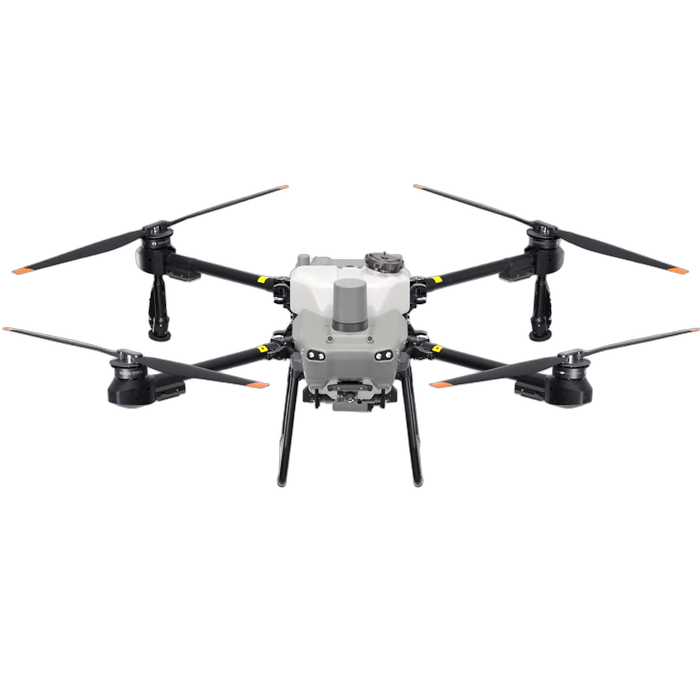
- Mid-size spray drones: The DJI Agras T50, with roughly a 40kg spray payload, has settled around $24,000 for the aircraft and about $28,000 after recent discounting for a workable setup.
- Flagship spray drones: The DJI Agras T100 and comparable XAG P150, both around 70 to 75 litres, sell for roughly $45,000 to $50,000 with batteries and training included on some packages.
- The surrounding kit: A three-phase generator to keep rapid-charge batteries active can run about $10,000, and RTK base stations, spreaders, and mapping drones add further.
You can browse current listings and request quotes through the agricultural drone category on IndustrySearch, where suppliers across the country compete on price and support.
What changes the price
Two drones with similar tank sizes can differ by thousands once you look past the aircraft. The factors that swing a quote:
- Payload and coverage: Bigger tanks and wider spray widths clear more hectares per hour, and that productivity carries the biggest price premium.
- Batteries and charging: Flights last only five to six minutes fully loaded, so rotating multiple fast-charge batteries and running a generator is essential, not optional.
- Navigation and sensing: RTK positioning, LiDAR, and radar obstacle avoidance improve accuracy and safety on undulating or timbered country but raise the cost.
- Spreader and mapping add-ons: A granular spreader for seed, fertiliser, or baits, and a dedicated mapping drone, extend the machine's usefulness for extra outlay.
- Training and support: Some packages bundle CASA-required training and months of phone support; cheaper grey-import deals often do not.
Buy, contract, or share the cost
Not every grower needs to own a drone. The three common routes each suit a different operation, and the right one depends on how many hectares you cover and how often.
| Option | Best for | Cost profile |
|---|---|---|
| Buy outright | Regular, large-area work across a season | High upfront, lowest per-hectare over time |
| Hire a contractor | Occasional or one-off spraying jobs | Per-hectare or hourly, no capital outlay |
| Finance the purchase | Owning without the full upfront hit | Monthly repayments, interest, tax treatment |
Contract rates give a useful benchmark: spot spraying in difficult pasture typically runs $275 to $325 per hour, while broadacre work is often priced at roughly the application rate multiplied by 1.8 (about $36 per hectare at 20 litres per hectare). If you are spraying enough hectares that contractor bills dwarf a repayment schedule, ownership starts to make sense.
Don't forget compliance and running costs
The sticker price is only part of the commitment. Under CASA rules, commercial drone operation generally requires accreditation or a Remote Pilot Licence, and the larger agricultural aircraft carry additional approval requirements given their weight and chemical payload. Factor in ongoing costs too: replacement propellers, pumps, nozzles, batteries as they age, chemical, and the fuel or power to run your generator. A drone that sprays abrasive or corrosive products will wear parts faster, so budget for consumables from the start.
A realistic scenario
Picture a mixed grain and grazing property in western New South Wales with steep, timbered country that a boom sprayer can't safely reach and serrated tussock spreading through the gullies. The grower has been paying a helicopter contractor tens of thousands of dollars a season to treat it.
A flagship spray drone at around $50,000, plus a $10,000 generator, looks steep on paper. But spread against the aerial spraying bill it replaces, and the extra grazable land recovered from the tussock, the maths turns quickly. Within a season or two the machine has paid for itself, and the grower can take on contract spraying for neighbours to accelerate the return. For a property at the smaller or mixed end, it is worth weighing a drone against a conventional agricultural sprayer or boom sprayer first, since a ground rig still covers far more flat hectares per day. For a sense of how larger farm-machinery purchases are priced and financed, the Australian farm tractor buying guide is a useful reference point.
Frequently asked questions
Do I need a licence to fly an agricultural drone?
For commercial use, yes. CASA requires accreditation or a Remote Pilot Licence for most paid or business operations, and heavier agricultural drones carry extra approval requirements. Some suppliers include the required training in their package, so ask before you buy.
How long does it take for a spray drone to pay for itself?
On properties with high contractor bills or hard-to-reach country, payback often lands within one to two seasons through chemical savings of up to 50% and reduced reliance on aerial or ground contractors. Small, flat farms with light spraying needs take longer.
Are there grants for buying farm drones?
The federal On Farm Connectivity Program has reimbursed up to 50% of qualifying connectivity and equipment purchases, and various state and precision-agriculture schemes come and go. Check current eligibility before you buy, as rounds open and close and criteria change.
Is it better to buy a drone or hire a contractor?
If you spray large areas regularly, ownership gives the lowest cost per hectare over time. For occasional jobs, a contractor at $275 to $325 per hour for spot work avoids the capital outlay, licensing, and maintenance entirely. Match the choice to how many hectares you cover each year.
What matters most
An agricultural drone is a farm-machinery decision, not a tech splurge. Price the whole system, not just the aircraft: batteries, generator, spreader, training, and consumables all belong in the budget. Then set that total against the contractor bills, chemical savings, and reclaimed country the drone delivers on your specific property. Get the payload matched to your terrain and your hectares, factor in the CASA compliance, and the right drone earns its keep fast. Buy more machine than your country needs and the numbers take far longer to work.
Ready to compare spray drone prices for your property? Get quotes from agricultural drone suppliers across Australia here.