
Key takeaways
Everywhere in Australia: the Food Standards Code requires potentially hazardous food to be transported at 5°C or colder (or 60°C or hotter), and frozen food to stay frozen.
Victoria: you need a PrimeSafe Meat and Seafood Transport Vehicle licence to own or drive a vehicle carrying meat or seafood for sale. The vehicle is inspected, and 2025-26 fees run from $156 for a van to $301 for a truck over 4.5t GVM.
NSW: wholesale transport of meat, dairy or seafood needs a NSW Food Authority licence. Licensed vehicles carry a label and are inspected on a schedule.
Queensland: transporting meat needs Safe Food Production Queensland accreditation, with a management statement and photos of the vehicle. It renews every calendar year.
Build the truck to the licence: meat vehicles need smooth, impervious, corrosion-resistant internal surfaces. Confirm the body meets your state's requirements before you sign the order.
This guide covers the licences and temperature rules that apply to the vehicle. Licence requirements change, so confirm the current rules with your state regulator before buying.
What temperature rules apply to every refrigerated food truck?
Every food business that transports food must follow Standard 3.2.2 of the Food Standards Code. For potentially hazardous food, such as meat, dairy, seafood and many prepared foods, that means:
Cold food kept at 5°C or colder
Hot food kept at 60°C or hotter
Frozen food kept frozen throughout transport
Food protected from contamination
These rules apply whether or not your state requires a vehicle licence. Food service businesses handling unpackaged, ready-to-eat potentially hazardous food may also need to show evidence of their transport controls under Standard 3.2.2A.
Which states require a licence for the vehicle?
Victoria, NSW and Queensland each run a licensing or accreditation scheme for vehicles carrying certain foods.
State | Who needs it | Regulator | What it involves |
|---|---|---|---|
VIC | Anyone who owns or drives a vehicle carrying meat or seafood for sale for human consumption | PrimeSafe | Vehicle inspection, construction to the meat transport standard, licence label, annual renewal by 30 June |
NSW | Businesses transporting meat, dairy or seafood wholesale (business to business) | NSW Food Authority | Licence, vehicle label, scheduled inspections |
QLD | Businesses transporting meat from slaughter through to retail, or to smallgoods, pet meat or rendering processors | Safe Food Production Queensland | Accreditation, management statement, vehicle photos, annual renewal by calendar year |
Other states and territories run their own food safety schemes. Check with your state's food regulator before you buy.
Victoria: PrimeSafe Meat and Seafood Transport Vehicle licence
In Victoria, you need a licence to own or drive a vehicle that transports meat or seafood for sale for human consumption. To qualify, the vehicle must meet the construction requirements of the Australian Standard for meat transport (AS 4696). It must also be inspected by PrimeSafe or an accredited certification body.
Vehicle type | 2025-26 licence fee |
|---|---|
Commercial van | $156 |
Truck or trailer up to 4.5t GVM | $238 |
Truck or trailer over 4.5t GVM | $301 |
The licence comes with a label that must be displayed on the vehicle, and it expires on 30 June each year. You do not need this licence if your vehicle is already licensed in another state or territory.
You also do not need it for some uses, including:
Carrying pet food
Delivering from a retail butcher shop to a retail customer
Carrying cartoned meat to cold stores or wharves in a refrigerated tautliner
Since 2023, licensed meat transport vehicles no longer need their own food safety program. Meat and seafood temperatures must still be monitored during transport.
NSW: Food Authority food transport licence
In NSW, a business must hold a Food Authority licence to transport the following foods wholesale, meaning business to business:
Milk or dairy products
Meat or meat products, including game meat and animal food
Seafood or seafood products, not including live seafood
Licensed vehicles receive a label and are inspected on a scheduled basis. Food transport vehicles do not need to prepare a food safety program. The Food Authority also recommends pre-cooling the vehicle before loading.
The meat-carrying compartment of a meat van must have durable surfaces that are:
Smooth, impervious and corrosion-resistant
Odour-free and able to withstand repeated cleaning and sanitising
Light enough for contamination to be easily seen
Transport of seafood from retail premises to the consumer does not need this licence.
Queensland: Safe Food transporter accreditation
In Queensland, you need accreditation from Safe Food Production Queensland if you transport meat at any stage from where the animal was killed to a retail premises. The same applies if you carry meat to a site that makes smallgoods, pet meat or rendered products.
To apply, you need to submit:
An application form
A management statement explaining how you manage food safety risks
Photos of each vehicle, including its doors, seals and registration
Accreditation runs from 1 January to 31 December and renews each year. It must be granted before you start operating, so allow time for the review.
What does the truck itself need to pass?
If you carry meat, build the body to the construction requirements in your state, which draw on AS 4696. In practice, that means:
A carrying compartment separate from the cab
Internal surfaces that are smooth, impervious, corrosion-resistant and easy to clean
Doors and seals that keep out dust, fumes and other contaminants
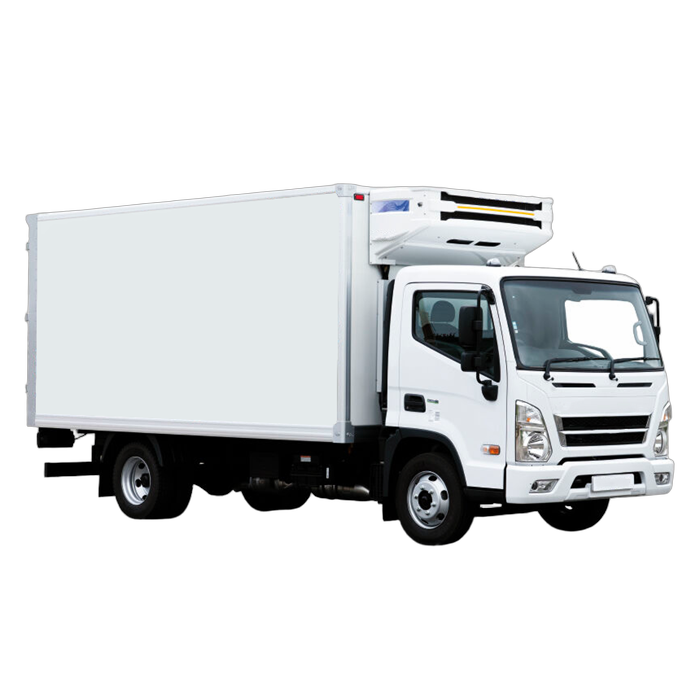
A fridge unit that holds 5°C or colder for chilled product, or keeps frozen product frozen
Give these requirements to the body builder before the build. Fixing a body that fails an inspection costs far more than specifying it correctly. For the full body specification, see our guide to ordering a new refrigerated truck body.
Does a licence transfer when you buy a used truck?
Not automatically. In Victoria, the licence holder must notify PrimeSafe when a vehicle changes ownership, so a new owner applies in their own name. In NSW and Queensland, the business holds the licence or accreditation and must keep the vehicles listed on it up to date.
When buying used, check whether the body was previously licensed, and inspect the lining for cracks or damage that could fail an inspection. Our guide on what to check on a used refrigerated truck covers the fridge unit and body inspection.
Licence checklist before you buy
Confirm what you will carry, and whether it is wholesale or retail delivery.
Check whether your state requires a vehicle licence or accreditation for that food.
Give the construction requirements to the body builder in writing.
Confirm the fridge unit can hold your required temperature, and how you will monitor and record it.
Allow time for the application, inspection or accreditation before the truck's first run.
Once you know the requirements, you can request refrigerated truck quotes from Australian suppliers on IndustrySearch and ask each supplier to confirm the truck will meet them.
Frequently asked questions
Do I need a licence to deliver groceries or meal kits?
The national temperature rules apply to any food business. State vehicle licences in Victoria, NSW and Queensland focus mainly on meat, seafood and, in NSW, dairy. Check with your state regulator for your exact products.
Can a Victorian butcher deliver to customers without a vehicle licence?
Delivery from a retail butcher shop to a retail customer is exempt from the PrimeSafe vehicle licence. Temperature and food safety rules still apply.
Do I need a food safety program for the truck?
Licensed meat transport vehicles in Victoria no longer need their own food safety program, and NSW food transport vehicles do not need one. Queensland requires a management statement with the application.
Can I use a refrigerated truck licensed in another state in Victoria?
Yes. PrimeSafe does not require its licence for a vehicle already licensed in another state or territory.
-160x160-state_article-rel-cat.png)
-160x160-state_article-rel-cat.png)