
Key takeaways
| Factor | What it means for you |
|---|---|
| Day cab | No bunk. Lighter, shorter, better payload. Suits local and day-return work. |
| Sleeper cab | Has a bunk for overnight runs, at the cost of length, weight and price. |
| Engine power | Match power and torque to your GCM and terrain, not to the highest number. |
| Route decides it | Linehaul leans sleeper and more power; local leans day cab and right-sized power. |
| Driver comfort | On long routes, cab comfort affects retention as much as the spec sheet. |
Cab and power follow the kind of work you do
After the axle configuration, the next decisions on a prime mover are the cab and the engine. Both come down to one question: what kind of work does the truck do, and how far does it run each day.
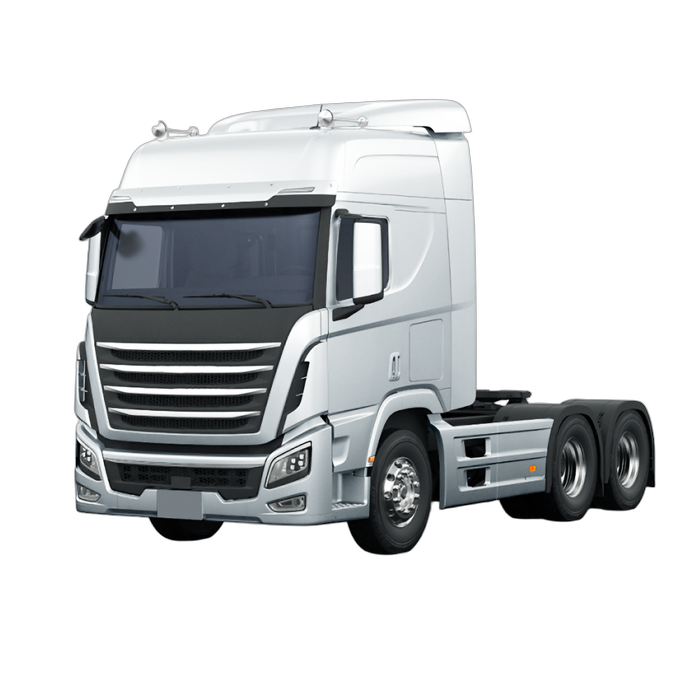
A day cab has no bunk and suits local and day-return work. A sleeper cab carries a bunk for overnight runs but adds length, weight and cost. Engine power and torque should match your gross combination mass and terrain, not chase the highest figure on the spec sheet. For pricing by configuration, see our prime mover price and buying guide.
Day cab vs sleeper: side by side
| Factor | Day cab | Sleeper cab |
|---|---|---|
| Overnight capable | No bunk | Bunk for rest |
| Weight and length | Lighter, shorter | Heavier, longer |
| Payload effect | More usable payload | Slightly less |
| Cost | Lower | Higher |
| Best for | Local, day-return runs | Long-haul and overnight routes |
Choose a day cab for local and day-return work: the lighter, shorter cab frees up payload and costs less when no one sleeps in the truck.
Choose a sleeper for long-haul and overnight routes: the bunk is essential for rest, and a comfortable cab helps you keep good drivers on the road.
Getting the engine power right
Engine power and torque should match your heaviest regular gross combination mass and the terrain you run. Too little power strains the truck and slows you on hills; too much adds cost and fuel use you do not need. Heavier combinations and hilly or remote routes call for more power, while lighter loads on flatter routes do not. Ask the supplier what real-world power suits your typical combination and route profile.
Australian compliance points
- Overall combination length limits apply, and a longer sleeper cab uses some of that length.
- A sleeper used for rest should have an ADR-approved bunk for fatigue-managed work.
- Fatigue rules under the Heavy Vehicle National Law apply to long-haul driving regardless of cab type.
- A used prime mover needs a current roadworthy or safety inspection for your state or territory.
- A heavy combination or multi-combination licence applies depending on the configuration.
What to check and ask before you get quotes
| What to check | What to ask the supplier |
|---|---|
| Cab type | Is this a day cab or sleeper, and does it suit my routes? |
| Length and weight | How much length and tare does the cab use? |
| Engine power | What power and torque does it have, and does it suit my GCM? |
| Terrain fit | Is the power right for the hills and distances I run? |
| Fuel use | What fuel use should I expect for this power on my routes? |
| Driver comfort | What cab comfort and bunk features does it have for long runs? |
| Transmission | Is it manual or automated, and which suits my work? |
| Independent check | Can I get my own inspection before I commit? |
Once the cab and power suit your routes, get quotes for prime mover trucks from a few suppliers so you can compare like for like.
Frequently asked questions
Do I need a sleeper cab?
Only if your drivers regularly run overnight and need to rest in the truck. For local and day-return work, a day cab is lighter, shorter and cheaper, and frees up payload you would otherwise lose to the bunk.
Does a sleeper cab reduce my payload?
Slightly. A sleeper adds weight and length compared with a day cab, which takes a little off usable payload and combination length. On long-haul work the bunk is worth it; on local work it is weight you do not use.
How much engine power do I need?
Match power and torque to your heaviest regular combination and your terrain. Heavier loads and hilly or remote routes need more power, while lighter loads on flat routes do not. Chasing the highest figure adds cost and fuel use you may never use.
Is more power always better?
No. Too much power for your work means paying for capability you do not use and often burning more fuel. The aim is enough power to handle your heaviest load and terrain comfortably, with a sensible margin, not the biggest engine available.
Why does cab comfort matter for buying?
On long routes, a comfortable cab affects how long you keep good drivers, which is a real cost in a tight labour market. For overnight work especially, bunk quality and cab features are worth weighing alongside the mechanical spec. If you also haul plant on a low-loader, match the prime mover to the trailer, as covered in our low-loader trailer buying guide.
What matters most
- Day cab suits local and day-return work; sleeper suits overnight runs.
- A sleeper adds length, weight and cost, so only buy it if you use it.
- Match engine power and torque to your GCM and terrain.
- Overspeccing power adds cost and fuel use for little gain.
- On long routes, cab comfort affects driver retention as well.
Get and compare prime mover truck quotes now from verified Australian suppliers, with the cab and power matched to your routes.
-160x160-state_article-rel-cat.png)
-160x160-state_article-rel-cat.png)