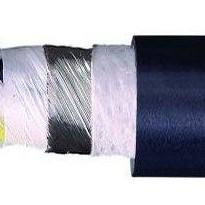


Mining is a hazardous environment at the best of times and isbecoming increasingly complex, with long-distance conveyor systems, undergroundnetworks and distributed electrical infrastructure all posing increasing safetychallenges. As sites expand, systems must transmit shutdown commands reliablyover tens of kilometres and verify that they have been executed. Here, IanLoudon, international sales and marketing at remote monitoring specialist Omniflex, highlights the importance of fibre optictechnology in delivering this.
Conveyorsare the backbone of coal extraction, transportation and processing, but theyalso represent one of the greatest sources of operational and safety risk. Asmines have grown larger and more complex, belts that once stretched a fewhundred metres now extend for many kilometres, often across uneven terrain ordeep underground. Ensuring safe operation across these vast distances dependson reliable emergency signalling, responsive shutdown systems and verifiablefeedback loops.
Conveyorbelts often run up to 20–30 kilometres, with multiple drive motors,synchronised programmable logic controllers (PLCs) and intermediate loading ordischarge points. When failure occurs at any point along that distance, theconsequences can escalate rapidly.
Traditionalcopper cabling was never designed to carry safety-critical signals over the10–30 kilometre spans now common in mining operations. Signal degradation,voltage drop and electromagnetic interference (EMI) from surrounding drives,motors or switching equipment all undermine reliability. When signalling runsrequire repeaters, the number of dependency points increases and so does thepotential for failure.
Coppercabling is therefore no longer fit for purpose in long-distance or electricallyhostile mining environments. Lengthy copper runs are prone to EMI and voltageloss, while any attempt to push signals beyond around 10 kilometres typicallydemands additional converters or amplifiers, creating further vulnerability.Underground, signal strength can also be limited as dense rock formations andheavy electrical infrastructure disrupt transmissions.
Mostimportantly, traditional one-way signalling introduces dangerous uncertainty.In the event of a shutdown request, mines are left relying solely on the factthat a command was sent, rather than knowing that it was received and actedupon. For safety-critical equipment such as conveyors, crushers or ventilationsystems, certainty is everything.
How fibre optic technology provides certainty
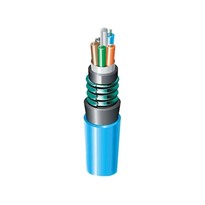
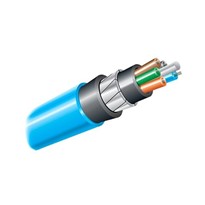
Toaddress the reliability limits of copper and legacy one-direction shutdowncircuits, many operators are now turning to fibre optic transmission forsafety-critical signalling. Fibre offers several advantages in miningenvironments: it is immune to EMI, intrinsically non-sparking and capable of reliablytransmitting contact signals over distances of 20–30 kilometres. Inlong-distance conveyor networks, deep underground haulage routes orelectrically hostile substation areas, these characteristics eliminate many ofthe vulnerabilities that compromise the performance of conventional systems.
Themost important evolution in thinking is the shift from simply issuing ashutdown signal to verifying its result. In mining environments, the differencebetween “signal sent” and “shutdown confirmed” can determine whether machinerycontinues running with a damaged belt, a stalled crusher or elevated gasreadings.
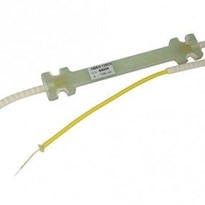
Specialistfibre optic modules designed for safety-critical applications, includingSIL-rated bidirectional contact repeaters, embody this approach. These devicesreplicate contact states over long distances while providing dual-redundantmonitoring and clear feedback to the originator. By transmitting both theinitiating signal and its confirmation across the same optical link, theyreduce uncertainty, minimise wiring infrastructure and support compliance withmine shutdown, emergency isolation and interlock requirements.
Asconveyor systems grow longer, underground workings expand and electricalnetworks become more distributed, this approach offers a path to greaterresilience and clarity. Rather than relying on inferred responses, operatorsbenefit from definitive proof: the shutdown command travelled, the machineryresponded, and the system is now in a safe state. That level of certainty formsthe basis of a robust safety culture within modern coal operations, reflectinga broader industry shift toward verified safety rather than assumed outcomes.
Omniflexhas extensive experience in engineering SIL-rated fibre optic systems forlong-distance, safety-critical environments. Our fibre modules are designed forbidirectional contact replication, auxiliary confirmation and fail-safebehaviour, and have been deployed across mining, nuclear and electricalinfrastructure where reliability and verification are paramount.
Tolearn more about applying fibre-based signalling to safety-critical shutdown,interlock or emergency stop systems, speak to Omniflex’s engineering team orvisit our fibresafety solutions online.


-160x160-state_article-rel-cat.png)

-160x160-state_article-rel-cat.png)