

Industrial Edge Computing for Smart Automation
Industrial Edge Computing brings data processing closer to machines, sensors, and control systems, enabling faster and more reliable automation.
Instead of sending all data to the cloud, edge devices process information locally, allowing real-time decision-making, reduced latency, and improved system stability.
This approach is critical for modern industrial environments where speed, reliability, and uptime are essential.
Why Edge Computing Matters
-
Real-Time Processing
Immediate analysis and control actions at the machine or panel level -
Reduced Latency
Faster response for alarms, shutdowns, and process adjustments -
Reduced Cloud Dependency
Systems continue operating even with limited or unstable connectivity -
Predictive Maintenance
Detect equipment issues early through local data analysis
Core Edge Devices
-
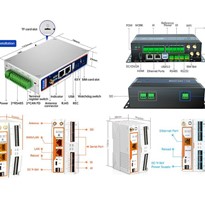
Edge Gateways
Collect, filter, and transmit data from PLCs, sensors, and field devices -
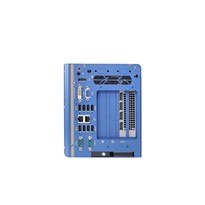
IoT Controllers / Edge Computers
Execute advanced logic, automation workflows, and analytics -
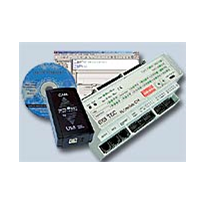
Modular IO Controllers
Provide scalable input/output expansion for control and monitoring
Industrial Applications
-
Manufacturing – Real-time process monitoring and control
-
Utilities & Energy – Asset monitoring and predictive maintenance
-
Remote Operations – Distributed automation across sites
-
Smart Infrastructure – IoT-enabled systems and data integration
-
Legacy Integration – Connecting existing systems to modern IIoT platforms
Conclusion
Industrial Edge Computing delivers faster, smarter, and more reliable automation by processing data at the source.
It reduces reliance on cloud systems, improves responsiveness, and enables scalable industrial IoT deployments, making it a key enabler of Industry 4.0 and intelligent operations.


-160x160-state_article-rel-cat.jpg)


-160x160-state_article-rel-cat.png)