





How this page helps you choose the right wood chipper
Choosing the right wood chipper comes down to a handful of decisions. Here we walk you through the ones that matter most. This helps you make a choice that meets your needs and your budget, without any expensive surprises after delivery. When you are ready, use our popular Get Quotes option to connect with verified Australian suppliers, so you can compare quotes and buy with confidence.
Three common wood chipper setups
What a commercial wood chipper costs, by capacity class
A wood chipper runs from about $15,000 for a small towable unit to $250,000 or more for a large tracked drum machine. Chipping capacity, the diameter of timber the machine takes, sets the band. Cutting type and how the machine is powered then change the price within it.
| Capacity class | Typical price AUD, usually quoted before GST | Best fit |
|---|---|---|
| Small towable (up to 150 mm, 6 inch) | $15,000 - $45,000 | Landscapers, orchardists, small tree work, and hire yards: light brush and branches |
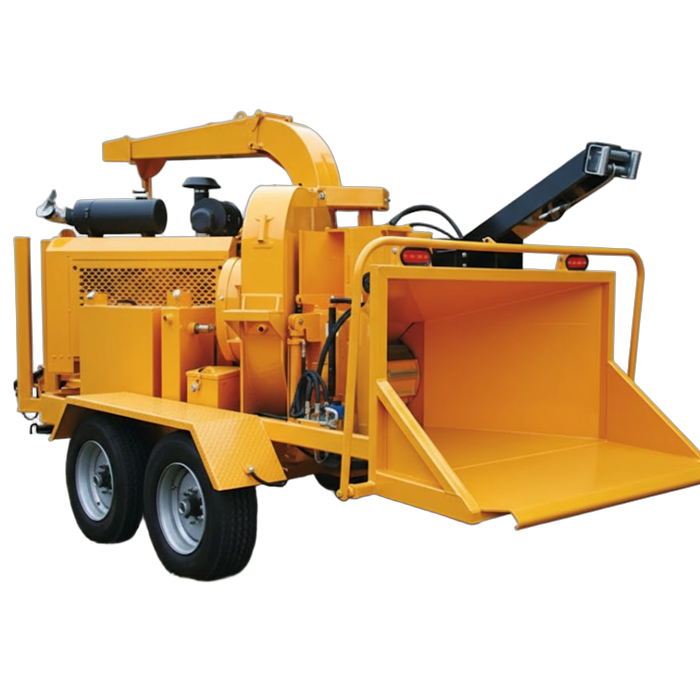
| Mid commercial (180 - 300 mm, 7 - 12 inch) | $45,000 - $110,000 | Professional arborists and councils: the everyday workhorse class |
| Large drum or tracked (330 mm, 13 inch and up) | $110,000 - $250,000+ | Land clearing, forestry, and fleet operators: high volume and large, tough timber |
Disc or drum: the core cutting choice
This is the decision that sets the machine. A disc chipper and a drum chipper handle material differently and suit different work. Get this right before you compare anything else.
Sizing the capacity and feed system to your material
One connected decision: how big a piece the machine takes, and how that material gets pulled in. Match the chipping capacity to the largest timber you cut, then set the feed system to your crew and your safety plan.
| Spec | What it controls | Why it matters |
|---|---|---|
| Chipping capacity | The largest diameter timber the machine takes, rated in millimetres or inches. | Size it to your biggest regular log, not your average. A machine that stalls on your largest material costs you time |
| Throat or in-feed opening | The size and shape of the feed mouth. | A wider opening takes forked and bushy limbs without trimming, which speeds feeding |
| In-feed rollers | Hydraulic rollers grip and pull material through at a steady rate. | Hydraulic feed lifts output and cuts hazardous manual handling against a manual chute |
| Autofeed and reverse | The system that senses load and adjusts feed, with a reverse to clear jams. | Autofeed protects the engine and keeps the chip even. A clear feed and reverse control also serves as a safety device |
| Feed control bar | The bar an operator hits to stop or reverse the feed. | A working feed-stop control changes how the machine is crewed and is central to safe operation |
How the chipper is powered and moved to site
One connected decision: what drives the cutter, and how the machine reaches and moves around the job. Both change the machine and the quote.
| Option | What it suits | Trade-off |
|---|---|---|
| Petrol engine | Small towable units for light, occasional work. | Lower cost and simple, but less power for sustained chipping |
| Diesel engine | The commercial standard for daily arborist and council work. | More power and torque and lower fuel cost per hour, at a higher purchase price |
| Power take-off (PTO) | Farms and operators who already run a tractor. | No second engine to buy or service, but the chipper ties up the tractor while it runs |
| Towable | Most site work: tow behind a ute or truck between jobs. | Needs a tow vehicle and clear ground to position |
| Tracked self-propelled | Rough, soft, or steep ground a towable cannot reach. | Goes where towables cannot, at a higher cost and weight |
Finance options for your wood chipper purchase
A wood chipper is a real capital cost, and the feed system, winch, and tracks add to it. To turn that into a regular repayment, many buyers weigh equipment finance alongside the quote comparison. What finance looks like for your business comes down to the answers below.
| Finance question | What it helps you decide | Why it matters |
|---|---|---|
| What could the repayment be? | Whether the chipper fits your cash flow before you commit to a quote. | A chipper sits in a price range where a regular repayment is easier to weigh against the work it does than the upfront cost alone. |
| Am I likely to get approved? | Whether your business, trading history, and the machine value are financeable. | IndustrySearch finance works across a panel of lenders, which can improve the chance of finding a suitable approval pathway. |
| Which finance structure suits the purchase? | Whether to compare a chattel mortgage, lease, rental, or a balloon payment. | The right structure can affect ownership, cash flow, and how repayments line up with your income through the year. |
Finance calculator
Estimate my repayment
Adjust the sliders to estimate your wood chipper repayments. Speak with our team for an exact quote based on your profile.
Estimate only, not an offer of finance. Compare quotes and finance options for wood chippers.
Common wood chipper questions buyers ask before quoting
Quick answers to the most-searched questions about wood chippers and how IndustrySearch works.
Why use IndustrySearch to buy a wood chipper?
IndustrySearch helps you compare multiple reputable Australian suppliers with a single enquiry, saving you time and effort. Instead of contacting suppliers individually, you can compare suitable machines, technology, compliance requirements, service support, and ongoing consumables in one place. This helps you find the right wood chipper for your operation while avoiding costly mistakes and making a more informed purchasing decision.
How much does a wood chipper cost?
Prices run from $15,000 to $45,000 for a small towable unit, $45,000 to $110,000 for a mid commercial machine, and $110,000 to $250,000 or more for a large drum or tracked chipper. These are indicative figures before GST. Capacity, cutting type, and how the machine is powered set where you land within each band.
What size wood chipper do I need?
Work back from the largest timber you cut, not the average. Up to 150 mm (6 inch) suits landscaping, orchards, and light tree work. 180 to 300 mm (7 to 12 inch) is the everyday arborist and council class. 330 mm (13 inch) and above is land clearing and forestry territory. Tell suppliers your biggest regular log and your weekly volume so they size it right.
Disc or drum chipper, what is the difference?
A disc chipper uses a spinning steel disc with knives and makes a clean, even chip, which suits arborist work where you sell or reuse the mulch. A drum chipper uses a rotating drum and powers through larger, dirtier, and tougher timber at higher volume, which suits land clearing and forestry. Match it to your main material and what you do with the chip.
Do I need a licence to operate a wood chipper?
There is no national high risk work licence for a wood chipper, unlike a forklift. Under work health and safety law the duty sits with the employer to make sure the operator is trained and competent for the machine. Feed safety is the main risk, so follow the operating and crewing guidance in the SafeWork NSW woodchipper guide and check your state regulator.
How often do the blades need replacing?
Knife life depends on your material and how clean it is. Dirt, grit, and sand blunt knives fast, while clean timber keeps an edge longer. Most operators sharpen or rotate knives on a regular schedule and replace them when they cannot be reground. Blades and the anvil are a normal running cost, so factor them in alongside fuel and servicing.
Is it worth buying a used wood chipper?
Wood chippers hold value, so there is a deep used market alongside new. New gives you a warranty, the feed system and safety features you choose, and the longest finance terms. Used costs less upfront and is often ready to work, but check engine hours, the knives and anvil, the feed rollers and hydraulics, and the safety devices, not just the hour meter. Ex-demo and dealer-refurbished machines sit in between.
Can I claim fuel tax credits on a wood chipper?
A diesel wood chipper used off public roads runs its engine as plant, which is the kind of off-road business use that can be eligible for fuel tax credits if your business is registered for goods and services tax (GST). Eligibility and rates depend on your circumstances and change over time. Check the ATO fuel tax credits for business page and its eligibility tool.
How long does equipment finance pre-approval take?
Equipment finance pre-approval is usually quick, often within a few business days once you provide basic business and financial details. Pre-approval lets you compare quotes knowing your repayment and borrowing capacity, without committing to a purchase.
Why buyers choose IndustrySearch
Helping Australian industrial buyers compare suppliers since 2005.