
Key takeaways
Manual mobile wrappers and turntables: Low thousands. OH and S improvement over hand wrapping for low-volume sites with tight space.
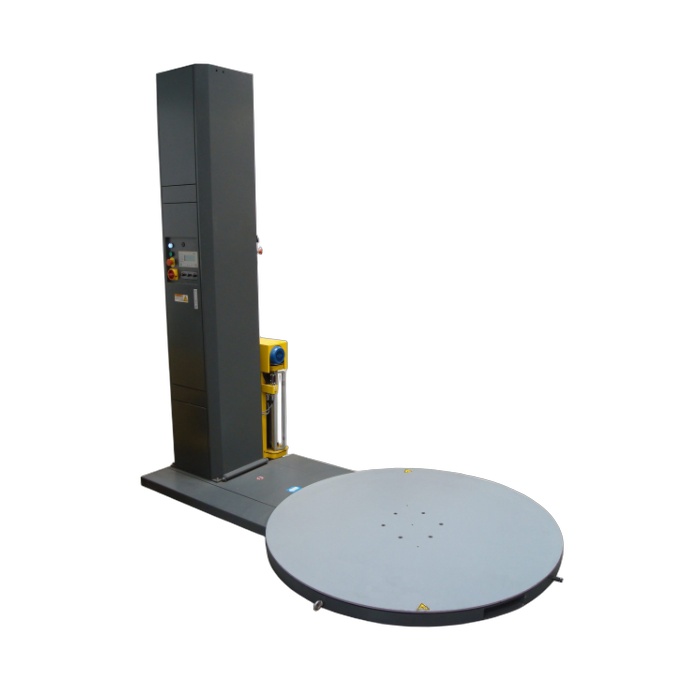
Semi-automatic turntables: Roughly $5,000 to $15,000. Operator loads and starts each cycle, suited to low-to-medium volume.
Automatic and rotary-arm systems: Roughly $15,000 to $50,000-plus. Inline conveyor feed for high volume or very light or heavy loads.
The hidden saving: Powered pre-stretch turns one metre of film into three or more, so the dearer machine often cuts your ongoing film bill sharply.
The decision: Match wrapper type and throughput to your pallet volume and load profile, then weigh total cost of ownership including film rather than the purchase price alone.
A pallet wrapping machine looks like a straightforward buy until you see the price spread: near-identical-looking machines quote anywhere from a few thousand dollars to well over $40,000. The difference is throughput, automation, and film efficiency - and it is that last factor, the ongoing film cost, that often decides which machine is actually cheaper to own. This guide covers what pallet wrappers cost in Australia in 2026, the running costs behind the price, and how to size a wrapper to your operation.
Why machine wrapping is worth the investment
Two pressures push warehouses off hand wrapping: labour and load integrity. Wrapping pallets by hand is slow, physically demanding, and inconsistent - operators bend and circle the pallet, and film tension varies with every load. A machine applies the right tension and coverage every time, producing tighter, more stable loads that survive transport with less product damage.
The catch is that the machine only earns its return if it matches your volume and load profile. An automatic inline wrapper on a handful of pallets a day is dead capital; a manual wrapper bottlenecks a high-volume line. Getting the fit right is the whole game, and it starts with understanding what each tier costs and delivers. Wrapping usually sits at the end of a packaging line, so it is worth planning it alongside a carton sealing machine and any roller conveyor feeding the wrap station.
Purchase price by machine type
Pricing tracks how much the machine automates and how it handles the load. Here is the practical breakdown by type:
Type | Typical price | Best suited to |
|---|---|---|
Manual mobile wrapper / turntable | Low thousands | Low volume, tight space, OH and S improvement over hand wrapping |
Semi-automatic turntable | $5,000 to $15,000 | Low-to-medium volume, operator loads and starts each cycle |
Automatic / rotary-arm | $15,000 to $50,000+ | High volume, inline conveyor feed, very light or very heavy loads |
The step up buys throughput and hands-off operation. A semi-automatic turntable still needs an operator to load, start, and cut the film; an automatic machine carries pallets in and out on a conveyor and wraps without intervention. A rotary-arm wrapper spins the film carriage around a stationary pallet, which suits loads that are too light or too heavy to spin safely on a turntable. Browse current listings and pricing across all tiers among pallet wrapping machines from verified Australian suppliers.
The running cost that decides the maths: film
The purchase price is only half the cost story. Stretch film is a recurring spend, and the machine's pre-stretch capability is what controls it. Powered pre-stretch mechanisms stretch the film before it reaches the pallet, commonly turning one metre of film into three, and higher-end units push further:
Pre-stretch percentage: A 200 to 300 percent power pre-stretch dramatically cuts film consumption per pallet. Over thousands of pallets a year, that saving can outweigh the price difference between machines.
Consistent tension: Machine wrapping applies even tension, so you use only the film the load actually needs - hand wrapping tends to over- or under-apply.
Film grade: Thinner, stronger machine films paired with good pre-stretch reduce both cost and plastic use, so the film specification is part of the buying decision, not an afterthought.
The practical lesson: a cheaper machine with weak or no pre-stretch can cost more to run than a dearer machine that halves your film bill. Cost the film over the asset life before you compare purchase prices. For a sense of how consumable cost dominates end-of-line equipment decisions, the carton sealer cost guide shows the same pattern, where tape rather than the machine drives the 10-year total.
The specs that decide the fit
When you request quotes, check these against your actual loads rather than the headline figure:
Load weight and turntable capacity: Most turntables handle around 1,500 to 2,000 kg. Confirm your heaviest routine pallet sits within the rating, and consider a rotary arm for very heavy or unstable loads.
Pallet height and turntable size: The machine must clear your tallest load and suit your pallet footprint. A low-profile turntable helps where pallet jacks load the wrapper directly.
Pre-stretch system: Powered pre-stretch is the biggest running-cost lever. Confirm the pre-stretch percentage, not just that the machine "has" pre-stretch.
Throughput: Match cycle time and automation level to your daily pallet count. An automatic inline wrapper is wasted on a handful of pallets a day; a manual wrapper bottlenecks a high-volume line.
Extras: Built-in scales, ramps, top sheet dispensers, and load-detection sensors add cost but remove separate steps or protect specific load types.
A realistic payback scenario
Picture a Melbourne distributor hand-wrapping about 40 pallets a day. Two staff take turns circling loads, film use is heavy and uneven, and a recent run of loads shifting in transit has damaged stock.
At that volume a semi-automatic turntable with a 250 percent power pre-stretch, around $9,000, is the natural fit. The decisive number is film: the pre-stretch roughly halves film use per pallet against hand wrapping, and across a year that saving alone recovers a large share of the machine cost, while the consistent tension ends the transit damage. Had the distributor bought a $40,000 automatic system it could never keep busy at 40 pallets a day, the payback would stretch out and much of that capital would sit idle. The machine that pays for itself is the one matched to the real pallet volume, not the most automated on the market.
Frequently asked questions
How much does a pallet wrapping machine cost in Australia?
Manual mobile wrappers and turntables start in the low thousands, semi-automatic turntables run $5,000 to $15,000, and automatic or rotary-arm systems climb from around $15,000 to $50,000-plus. Factor in ongoing film cost, which the machine's pre-stretch controls.
Why does film matter so much?
Stretch film is a recurring cost, and powered pre-stretch can turn one metre of film into three or more. A machine that cuts film use per pallet can be cheaper to own than a lower-priced machine with weak pre-stretch.
Turntable or rotary arm?
Turntable machines suit most standard, stable loads. Rotary-arm wrappers spin the film around a stationary pallet, which suits loads too light or too heavy to rotate safely on a turntable.
Do I need a fully automatic machine?
Only at higher volumes with an inline conveyor feed. For low-to-medium pallet counts, a semi-automatic turntable delivers most of the benefit at a fraction of the cost.
What matters most
A pallet wrapping machine is a two-part cost decision: the machine and the film it consumes for years afterward. The right choice is matched to your pallet volume, load weight, and height, with a pre-stretch system strong enough to control your film bill. Weigh total cost of ownership including film over the asset life rather than the lowest purchase price, size the wrapper to your real volume rather than the most automated unit available, and remember that the cheapest wrapper with poor film efficiency is rarely the cheapest machine to own.
Ready to compare specifications and pricing from Australian suppliers? Get quotes on pallet wrapping machines here.
-160x160-state_article-rel-cat.png)