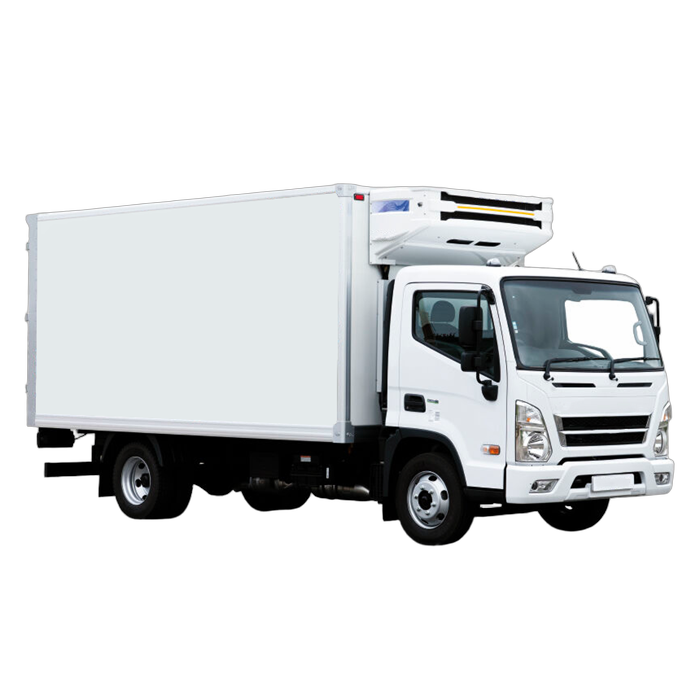

Key takeaways
| Factor | What it means for you |
|---|---|
| Start with the route | Drop count, stops and access decide the size more than load volume alone. |
| Van vs rigid | A van suits tight urban runs; a rigid suits bigger loads and longer routes. |
| Door openings | Lots of stops need a unit that recovers temperature fast. |
| Payload | Match usable payload to your real load, not the truck's headline size. |
| Access | City lanes, loading docks and parking can rule out a bigger truck. |
Size the truck to the run, not the other way round
For last-mile cold delivery, the right size of refrigerated truck is set by your route, not by the biggest load you might ever carry. A truck that is too big for tight city work costs you in fuel, access and parking; one that is too small means extra trips.
So before you look at trucks, map the run: how many drops, how close together, how often the doors open, how much you carry, and where you have to park and unload. Those answers point straight to the right size. For price bands by size, see our refrigerated truck price guide.
Match the vehicle to the work
| Type | Size | Best for |
|---|---|---|
| Refrigerated van | Up to 4.5t, car licence | Tight urban runs, many small drops |
| Light rigid | 4.5 to 8t | Mixed suburban routes, medium loads |
| Medium rigid | 8 to 12t | Larger loads, fewer stops, longer runs |
| Multi-temp body | Zoned, any of the above | Chilled and frozen on the same run |
Choose a van when the run is dense and urban with small drops: it parks easily, suits a car licence and handles frequent stops without the bulk.
Choose a rigid when loads are larger or routes are longer: the extra payload and range pay off, as long as access and parking on your route can take it.
Australian compliance points
- Bodies carrying food must meet Australian food safety standards, with a clean, food-grade interior.
- A refrigerated van up to 4.5 tonnes GVM can usually be driven on a car licence; above 4.5 tonnes the licence class depends on GVM and configuration, commonly LR, MR or HR.
- The truck needs a current roadworthy or safety inspection for your state or territory.
- Many cold-chain customers require temperature logging, so check the unit can record and report data.
- Trucks over 4.5 tonnes used commercially fall under the Heavy Vehicle National Law.
What to check and ask before you get quotes
| What to check | What to ask the supplier |
|---|---|
| Usable payload | What is the usable payload once the body, insulation, unit, shelving and any tail lift are counted, not just the GVM? |
| Temperature recovery | How fast does it pull temperature back after the doors open? |
| Licence class | Can this be driven on a car licence, or do I need a truck licence? |
| Access fit | What are the height and length, and will it suit my parking and docks? |
| Temperature range | Does it hold the chilled or frozen range my product needs? |
| Logging | Does it record temperature data my customers can rely on? |
| Door setup | Does it have side or rear access that suits the way I unload? |
| Independent check | Can I get my own inspection of the unit before I commit? |
Once you have the size matched to your route, get quotes for refrigerated trucks from a few suppliers so you can compare like for like.
Frequently asked questions
Do I need a van or a rigid truck for last-mile delivery?
A van suits dense urban runs with many small drops, because it parks easily and often needs only a car licence. A rigid suits larger loads or longer routes, as long as your route's access and parking can handle the bigger vehicle. If you are weighing up a secondhand unit, see our guide on what to check on a used refrigerated truck.
What size truck do I actually need?
Start with your route, not the truck. Map the number of drops, how close they are, how much you carry and where you park, and that points to the right size. Buying too big costs you in fuel and access; too small means extra trips.
Why do door openings matter so much?
Every time the doors open, cold air escapes and the temperature rises. On a busy last-mile run with frequent stops, you need a unit that recovers temperature quickly, otherwise the load drifts out of range between drops.
Can I run a refrigerated van on a car licence?
Usually yes, if it is up to 4.5 tonnes gross vehicle mass. Above that you need a light or medium rigid licence, so confirm the weight and the licence class with your state authority before you buy.
Should I size up for future growth?
Only a little. A truck sized far beyond your current run costs more to buy and operate every day for a load you do not yet carry. Match it to the work you do now, with a small margin, and add capacity when the volume is real.
What matters most
- Size the truck to your route, not the largest load you can imagine.
- Vans suit dense urban drops; rigids suit larger loads and longer runs.
- Frequent door openings need a unit that recovers temperature fast.
- Match usable payload and access to your real route.
- Confirm the licence class before you commit.
Get and compare refrigerated truck quotes now from verified Australian suppliers, with vehicle size, usable payload, temperature recovery and route access confirmed up front.
-160x160-state_article-rel-cat.png)
-160x160-state_article-rel-cat.png)