
Key takeaways
| Factor | What it means for you |
|---|---|
| The core question | It comes down to whether you carry one temperature or several on the same run. |
| Single-temp | Simpler, cheaper to run, fewer failure points. Best for one product class. |
| Multi-temp | Carries chilled and frozen together, but adds cost, weight and complexity. |
| Hidden cost | Multi-temp adds a bulkhead, a second evaporator and more to maintain. |
| Decide on routes | Base the choice on your product mix and routes, not on future maybes. |
The decision in one question
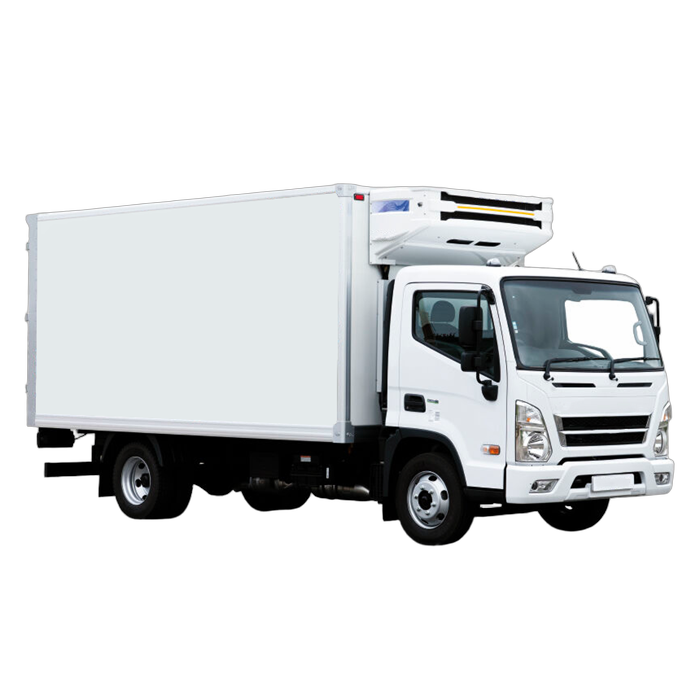
Choosing between a single-temp and a multi-temp refrigerated truck comes down to one thing: do you carry one temperature of product, or do you need chilled and frozen on the same run. Get that clear and the rest follows.
Multi-temp is not just a feature you bolt on. It changes the body design, adds a bulkhead and a second cooling zone, and gives you more to seal, monitor and maintain. That flexibility is worth a lot to the right operator and wasted money for the wrong one. For how setup affects price, see our refrigerated truck price guide.
Single-temp vs multi-temp: side by side
| Factor | Single-temp | Multi-temp |
|---|---|---|
| Best for | One product class per run | Chilled and frozen on one run |
| Body design | One zone, simple airflow | Zoned, with a bulkhead |
| Cooling hardware | Single evaporator | Second evaporator for the extra zone |
| Usable payload | More, lighter body | Less, bulkhead adds weight |
| Failure points | Fewer | More to seal, monitor and service |
| Cost | Lower to buy and run | Higher both ways |
Choose single-temp when one product class fills the body: simpler airflow, more payload and fewer things to go wrong make it the cheaper and more reliable option.
Choose multi-temp when one route carries both chilled and frozen: the zoned body saves a second truck, but only if the mixed load is regular, not occasional.
What to weigh up for your routes
A few route factors settle the decision. One temperature of product points to single-temp; regular mixed chilled and frozen loads point to multi-temp. Frequent door openings need a stronger unit and good airflow to recover temperature, and a tight payload favours single-temp, since the bulkhead eats into space and weight. Mixed chilled and frozen customers on one run favour the zoning flexibility, but remember a multi-temp body means more zones to log and prove for cold-chain customers.
Australian compliance points
- Bodies carrying food must meet Australian food safety standards, with a clean, food-grade interior in every zone.
- Many cold-chain customers require temperature logging, and a multi-temp body means proving each zone separately.
- The truck needs a current roadworthy or safety inspection for your state or territory.
- A medium or heavy rigid licence applies depending on the truck's weight.
- Watch payload limits, as a zoned body reduces how much you can legally carry.
What to check and ask before you get quotes
| What to check | What to ask the supplier |
|---|---|
| Zone setup | Is this single-temp or multi-temp, and how many zones? |
| Bulkhead | Is the bulkhead movable, and how well does it seal between zones? |
| Temperature hold | Can each zone reach and hold the temperatures I need? |
| Airflow | How quickly does it recover temperature after the doors open? |
| Payload | What is the usable payload once the body and bulkhead are counted? |
| Monitoring | Does it log each zone separately for my customers? |
| Servicing | What extra servicing does the second zone need? |
| Independent check | Can I get my own inspection before I commit? |
Once you have matched the setup to your routes, get quotes for refrigerated trucks from a few suppliers so you can compare like for like.
Frequently asked questions
Is multi-temp always better than single-temp?
No. Multi-temp is only better if you regularly carry chilled and frozen on the same run. If one product class fills your truck, single-temp is simpler, cheaper and more reliable.
What does multi-temp actually add to the truck?
It adds a bulkhead to divide the body and a second evaporator to cool the extra zone. That gives you flexibility but also more weight, more cost and more to seal, monitor and service.
Does multi-temp reduce how much I can carry?
Yes. The bulkhead and second zone add weight and take up space, so usable payload is lower than a single-temp body of the same size. If payload is tight, that is a real trade-off to weigh up.
Which is more reliable?
Single-temp has fewer parts and fewer failure points, so there is simply less to go wrong. Multi-temp is reliable when well maintained, but the extra zone and seals give you more to keep on top of. On a used multi-temp truck, check the bulkhead and second zone closely, as covered in our guide on what to check on a used refrigerated truck.
How do I decide if I am not sure?
Base it on the runs you do now, not on what you might do later. If your current routes do not regularly mix chilled and frozen, single-temp is the safer choice, and you can add a second vehicle later if the work changes.
What matters most
- The choice comes down to one temperature or several on the same run.
- Single-temp is simpler, cheaper and carries more payload.
- Multi-temp earns its cost only with regular mixed chilled and frozen loads.
- A zoned body adds a bulkhead, a second zone and more to maintain.
- Decide on the routes you run now, not on future maybes.
Get and compare refrigerated truck quotes now from verified Australian suppliers, with the zone setup, usable payload and temperature monitoring matched to your routes.
-160x160-state_article-rel-cat.png)
-160x160-state_article-rel-cat.png)